

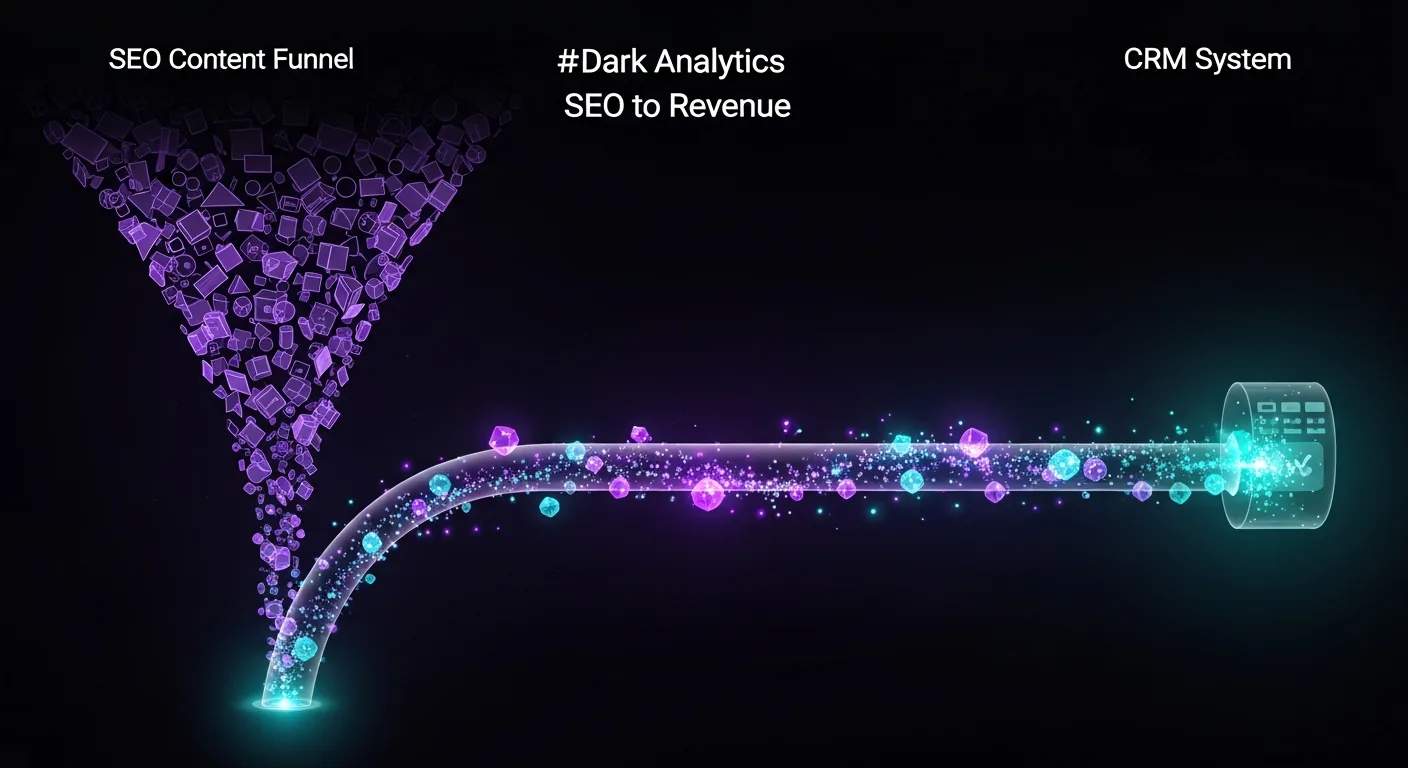
One of the most important topics for an owner: how to stop celebrating 'traffic' and start seeing which SEO pages actually help with pipeline and revenue.
SEO often reports traffic, impressions and rankings, while the owner cares about something else: leads, SQLs, revenue and payback period. Without CRM linkage, SEO stays half-blind.
Most B2B companies report SEO in two metrics: rankings and traffic. But the owner doesn't care about rankings — they care about how much money organic brought in. This gap between "traffic is growing" and "leads from organic — $X" exists in 90% of companies, and it's expensive: wrong content priorities, budget on the wrong channels, no clear link between SEO spend and revenue.
Good news: you can build this link without an expensive BI solution. You need properly configured UTM tags, a CRM with custom fields, and 3 reports that replace 20 dashboards. Here's how.
Attribution model for B2B SEO: why Last Click doesn't work
In B2B with a long sales cycle, a client might come from organic, leave, come back via direct, then via email—and the CRM shows "direct." SEO doesn't get credit. So the first step is to change the attribution model:
- First-touch attribution: We attribute the first channel through which a lead first landed on the site. For SEO, this is the most honest model — you show that organic "opened the door."
- Linear attribution: Each touchpoint gets an equal share. Suitable for companies with 3–5 touchpoints to a deal.
- U-shaped (position-based): 40% to the first touchpoint, 40% to the last, 20% split across the rest. Optimal for B2B.
Minimum setup for tracking SEO → lead → deal:
- 1. UTM tags on all non-branded organic links (via GSC or manually)
- 2. The "First channel" field in CRM — filled automatically via webhook from Analytics
- 3. The "Landing page" field — which site page brought the lead
- 4. Monthly report: Organic leads × deal conversion × average deal size
3 reports that matter for B2B SEO
Instead of drowning in 20 dashboards, focus on three:
Source: CRM + Analytics. Shows: how many leads came from organic in a month, how many became customers, and the average deal size.
Metrics: organic leads / lead-to-deal conversion / revenue from organic
Which specific site pages generate the most leads? That shows where to invest in content, and what you can skip updating.
Metrics: pages → sessions → forms → leads (GA4 Events + CRM)
Google Search Console + CRM: which queries land on pages that convert. This shows what commercial semantics actually brings in money.
Metrics: GSC clicks per query → landing page → leads → deals
Tools for B2B without unnecessary spend
No expensive BI needed. Here's the minimal stack:
- Google Analytics 4 + Looker Studio: Free. GA4 collects events, Looker Studio builds dashboards. Enough for most B2B.
- HubSpot or Pipedrive: CRM with attribution reporting. Automatically ties the lead to the channel via JavaScript tracking.
- Google Search Console: Free tool to understand which queries drive traffic to your site. The foundation of SEO reporting.
- n8n or Zapier: Automating data transfer between GA4, CRM, and reports. n8n — self-hosted, cheaper.
"When we built the SEO → CRM connection for a B2B logistics client, we found that 3 blog posts generated 60% of all organic leads. They reallocated budget to content and increased organic revenue by 40% in a quarter."
Where to start: 4 steps to transparent analytics
- 1Set up form and call tracking in GA4 — every inquiry must be logged as an Event with the source/medium parameter.
- 2Add "First channel" and "Landing page" fields to your CRM — fill them automatically or manually for each lead.
- 3Build a monthly report in Looker Studio or Google Sheets: organic leads → conversion → revenue.
- 4Review your top landing pages quarterly — strengthen converting articles and rework ones that drive traffic without leads.
Quick diagnosis
Check off the items you already have. This doesn't replace an audit, but it quickly shows how much control you have over the topic.
Entity block by topic
For a page to work for both people and search, it's important to explicitly name key entities and concepts. This makes the topic denser and the solution clearer, without marketing fog.