

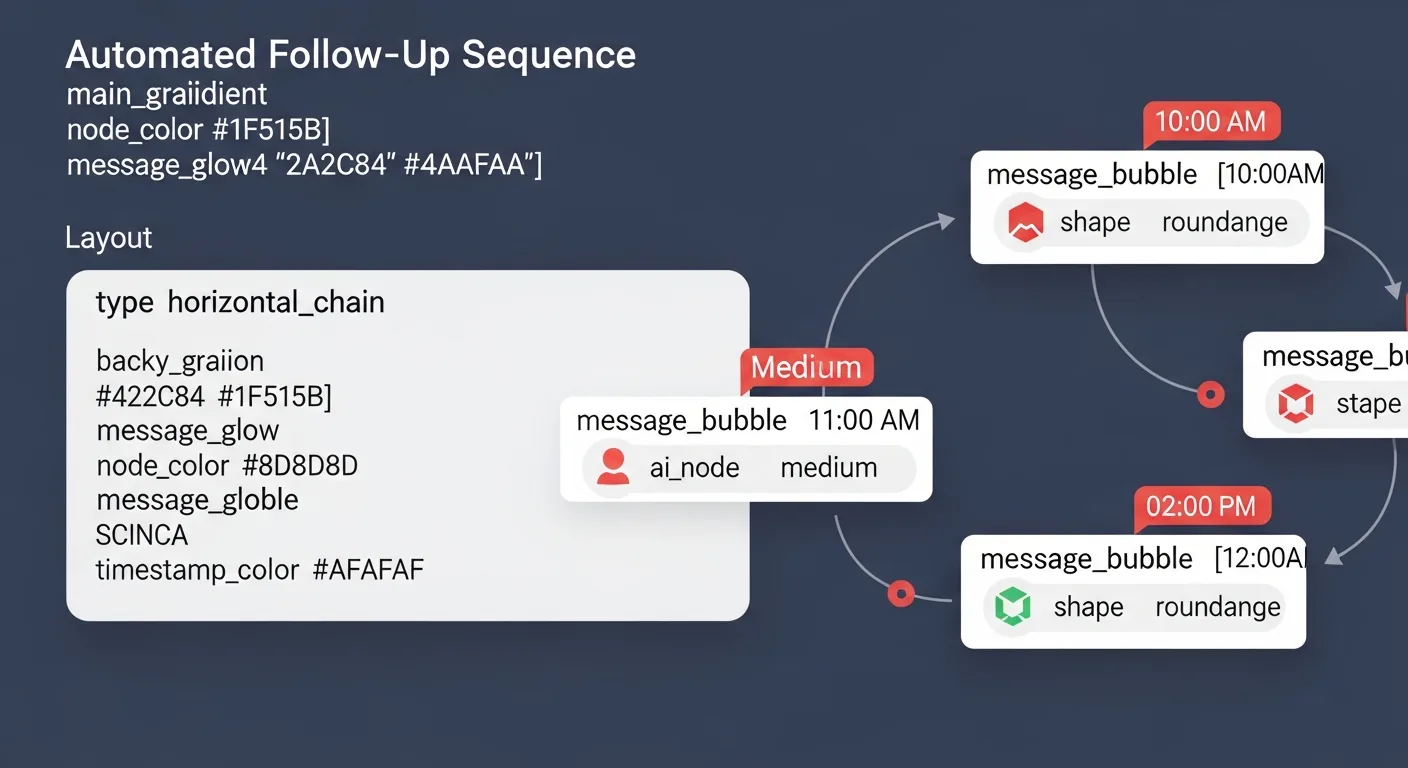
Most often, sales are lost not at lead generation, but between the first message and the actual meeting. Here's how AI helps close that gap.
The manager replied, the client didn't respond right away, the conversation went quiet — and three days later, no one remembers where things stalled. That's a classic follow-up leak.
The statistics are unforgiving: 80% of deals close after the 5th contact with a lead, but 44% of sales reps give up after the first "no response." In B2B with a long decision cycle, that means your business is systematically losing money—not because of bad reps, but because of a missing structured follow-up process.
AI solves this problem elegantly: it doesn't get tired, doesn't forget, doesn't hesitate to 'bother again.' And a good AI follow-up looks personal and relevant—not like spam. Here's how it works.
5-touch follow-up sequence: what to send and when
The optimal sequence for B2B after first contact (lead left an inquiry but hasn't answered the call yet):
AI generates a personalized email based on the form submission. It mentions the specific request, offers a useful resource (case study, checklist), and proposes 2 call slots.
AI reminds the manager in Slack with lead details and a recommended script. The manager calls armed with context.
AI sends a relevant case study or article — not "just checking in", but "here's something useful for your task". No purchase CTA, only value.
A short message in messenger: "Hi [Name], I sent an email earlier — just wanted to make sure you got it. Would 10 minutes this week work for a quick call?"
The final touch: "I understand this might not be the best time. If things change—I'm always here. Here's a useful resource for the road." Often, this is the email that gets a reply.
What AI writes, what a human writes: role split
Key principle: AI handles volume and consistency, humans handle trust and closing the deal.
- ✓ Personalized email after the form
- ✓ Reminders and a nurturing sequence
- ✓ Content emails with case studies
- ✓ Break-up letter
- ✓ Manager notifications
- ✓ Qualification call
- ✓ Answers to complex questions
- ✓ Presentation and demo
- ✓ Negotiating terms
- ✓ Deal closed
Personalization at scale: how AI knows what to write
Modern AI follow-up isn't mail merge. It uses data from the form, CRM, and on-site behavior:
- Form data: Company size, industry, request — AI adapts tone and content. One thing for a small business owner, another for a marketing director at a large company.
- On-site behavior: Which pages did the lead view? If they read about AI SDR, we write about SDR. If SEO, we write about SEO.
- Seasonality and context: AI inserts the current date, upcoming deadlines (end of quarter, business season), and relevant case studies.
"After launching a 5-touch AI sequence for a B2B IT services client, the share of leads that responded within 14 days grew from 22% to 58%. No extra sales reps needed."
The first touch after a form fill does not have to be written by hand at all. To hear how it sounds on your own facts, open the live AI agent demo: it builds a knowledge base from your URL in a few minutes and replies the way it would to a visitor at 2 a.m.
Quick diagnosis
Check off the items you already have. This doesn't replace an audit, but it quickly shows how much control you have over the topic.
Entity block by topic
For a page to work for both people and search, it's important to explicitly name key entities and concepts. This makes the topic denser and the solution clearer, without marketing fog.