AI outreach in B2B 2026: what changed and how to write so they reply
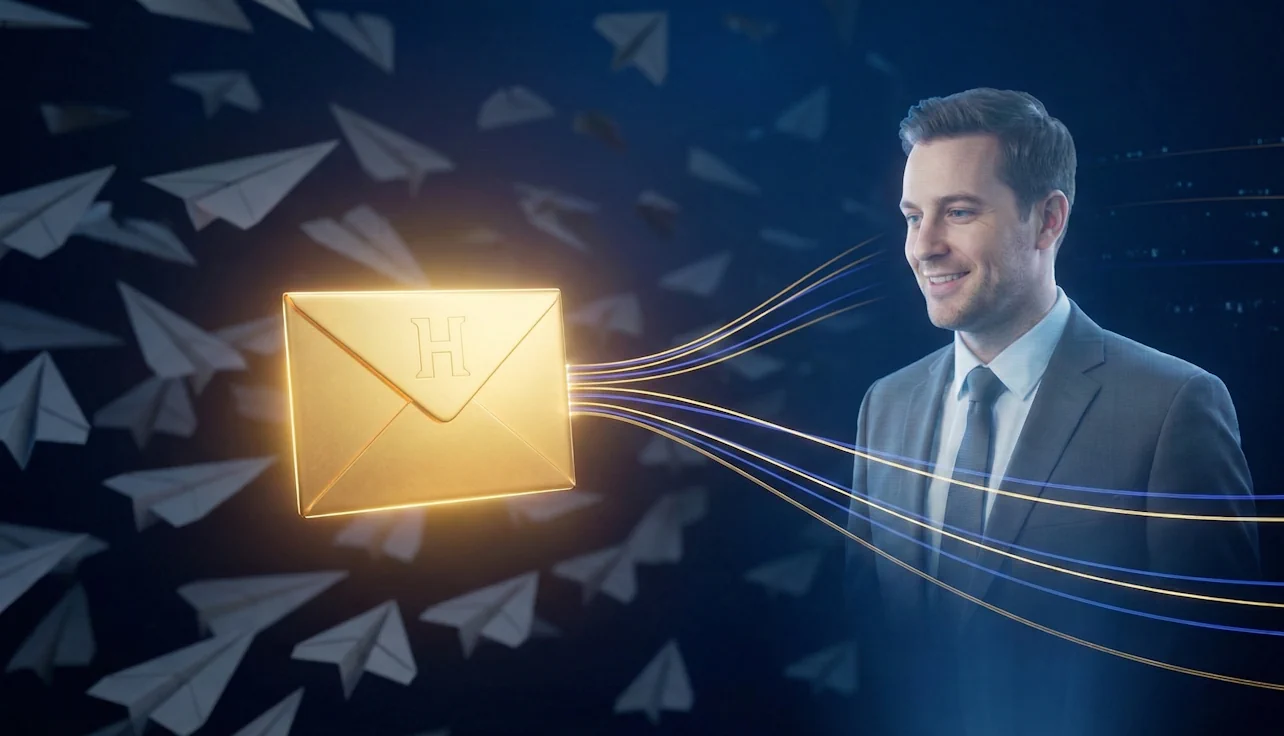
The old playbook was simple: buy a list of 10,000 contacts, send one template, get a few meetings. In 2026, that's dead. Email filters got smarter, people are tired of spam, and LinkedIn cuts mass connection requests. The paradox is that AI both killed and saved outreach: it made mass spam pointless but gave us a tool for personalization that actually gets responses. Let's break down what changed and how to structure cold outreach now so it drives meetings instead of burning your domain.
What you'll take away from this article
By 2026, mass identical outreach doesn't work: filters and people ignore it. What wins is personalization at scale — AI researches each recipient and prepares a relevant message, while a human controls quality. The key isn't volume, but relevance and channel reputation.
- why mass outreach stopped booking meetings
- How AI does personalization at scale
- what happened to deliverability and how to avoid spam
- the right sequence of touches for the US/EU market
What changed: why mass outreach is dead
Three things broke old-school outreach at once. First, email providers learned to recognize mass identical messages and bury them in spam before a human ever sees them. Second, people receive dozens of cold messages a day and ignore anything that looks like a template. Third, social networks restricted mass actions to protect users.
Bottom line: sending 10,000 identical emails today means burning your domain and reputation for almost zero meetings. The game shifted from "volume" to "relevance."
In 2026, the winner isn't the one who sent more, but the one who sent more relevantly. One precise message is worth a hundred templates.
Personalization at scale: the role of AI
There used to be a choice: either mass and bad, or manual and few. AI removed that trade-off. Now an agent can research the recipient's company, role, recent news, and context before each message — and craft a message that sounds like it was written personally. At the scale of hundreds of contacts.
But there is a nuance that separates results from disaster: AI prepares, human controlsFull automation without quality checks quickly devolves into weird, off-target emails. The strongest model: the agent does the rough personalization and research, while a human sets the tone, checks the logic, and holds the bar.
Deliverability: how to avoid spam
The best email is useless if no one sees it. Channel hygiene in 2026 is non-negotiable:
- Domain warm-up and a separate domain for outreachso as not to risk the core.
- Set up email authentication (SPF, DKIM, DMARC) — without these, emails go to spam.
- Smart volumes. Gradual scaling, not a barrage from day one.
- Clean database. Invalid addresses kill your sender reputation.
Email, LinkedIn or Telegram: what to choose
The channel depends on the market and the role. Email remains the baseline for B2B and the EU — formal, scalable, with analytics. LinkedIn is strong for reaching decision makers and building context before the email. Telegram works well in your market for fast, less formal contact. The strongest approach is a combination: a touch on LinkedIn, then an email, then — with permission — a fast channel. Sequence, not a single channel.
A touch sequence that gets replies
One email is a lottery. What works is a sequence of 4–6 touches, each adding value, not repeating 'so, have you thought about it?':
- Touch 1. A relevant reason and a short value hypothesis. No "let me introduce myself."
- Touch 2. Useful content or a case relevant to their situation.
- Touch 3. Another angle — a reminder of the specific problem you solve.
- Touch 4–5. Social proof, a short video, or a simple 15-minute offer.
- Final touch. A polite close often gets a reply too.
Every touch in that sequence sends the prospect to the same destination — your website — and that is where the sequence usually stops paying off: a warm contact arrives outside working hours, finds a contact form, and leaves. An AI agent on the site catches that moment, answers from your own pages and qualifies before a human is available. You can hear how it would sound for your company in the live AI agent demo, which assembles itself from your URL in a few minutes.
Mistakes that kill responses
Most meetings are lost not because of the product, but because of small things: a first email that's too long, talking about yourself instead of their problem, an obvious template, no clear next step, and pressure instead of value. AI helps remove these mistakes at scale — if it's guided by someone who understands sales.
Want outreach that brings meetings, not domain bans? AiUse builds AI outreach with personalization and quality control. Take a look AI Sales Force.
Learn about AI Sales Department →Is your outreach ready for 2026?
Check what you already have set up — and you'll see how ready your cold outreach is to bring meetings, not spam complaints.
Outreach readiness audit
Check what's already in your process
Bottom line: relevance beats volume
AI outreach in 2026 isn't about sending more—it's about sending smarter. AI enables personalization at scale, but the winners are those who pair AI with human quality control and technical channel hygiene. One precise touch with the right person beats a thousand templates. Stop competing on volume—start competing on relevance.

AiUse Team
B2B AI & Growth Architects
Frequently asked questions about AI outreach in B2B
Do cold outreach emails still work in 2026?
Yes, but not mass identical ones. Personalized outreach works: when every message is relevant to the recipient, is sent from a technically clean channel, and fits into a thoughtful sequence of touches. Mass templates today only burn your domain and reputation.
How does AI help with cold outreach?
AI researches the company and the role of each recipient and prepares a personalized message at the scale of hundreds of contacts. This removes the old trade-off of "mass but bad, or manual but few". But a human controls quality — full automation without review quickly slides into irrelevant emails.
How do you keep cold emails out of spam?
You need technical hygiene: a separate domain for outreach, proper email authentication (SPF, DKIM, DMARC), gradual volume ramp-up, and a clean list with no invalid addresses. Without this, even the best email goes unseen.
What's better for B2B — email, LinkedIn, or Telegram?
Depends on the market and your role. Email is baseline for B2B and EU, LinkedIn for reaching decision makers, Telegram for fast contact in your market. The strongest results come from combining channels in a sequence, not using just one.
How many touches does it take to get a response?
A single email is a lottery. What works is a sequence of 4-6 touches, where each adds value rather than repeating "so, have you thought about it?" Even a polite final close often gets a response.