AI implementation ROI: how to calculate payback without illusions

“How much will I make from this AI?” — that's the owner's key question, and tech vendors answer it vaguely. And you're right to ask: most AI projects fail not because the technology is bad, but because nobody calculated the payback before starting. AI is an investment, not magic. It has costs, payback period, and risks. Let's break down an honest ROI formula for AI, the hidden costs nobody mentions, and a calculation example so you can decide with numbers, not emotions.
What you'll take away from this article
The ROI of AI implementation is simple to calculate: (benefit − cost) / cost. The difficulty lies in honestly accounting for hidden costs (integration, training, support) and not overestimating the benefit. The most reliable approach is to start with one process where the effect is measurable, and scale only what has already paid for itself in numbers.
- An honest ROI formula for AI projects
- hidden costs nobody talks about
- sample ROI calculation for an AI sales agent
- how not to overestimate the upside or waste budget
Why AI projects fail in the economy
According to industry research, a significant share of corporate AI initiatives never reach payback. The reason is rarely the technology. More often, it's three mistakes: buying a solution "because it's trendy" without a business problem, not calculating total cost of ownership, and overestimating benefits based on vendor promises. AI without a business case and without calculation is an expense disguised as innovation.
AI doesn't have to be profitable on its own. It becomes profitable when applied to a specific task where it saves expensive time or recovers lost money. No task — no ROI.
An honest ROI formula for AI
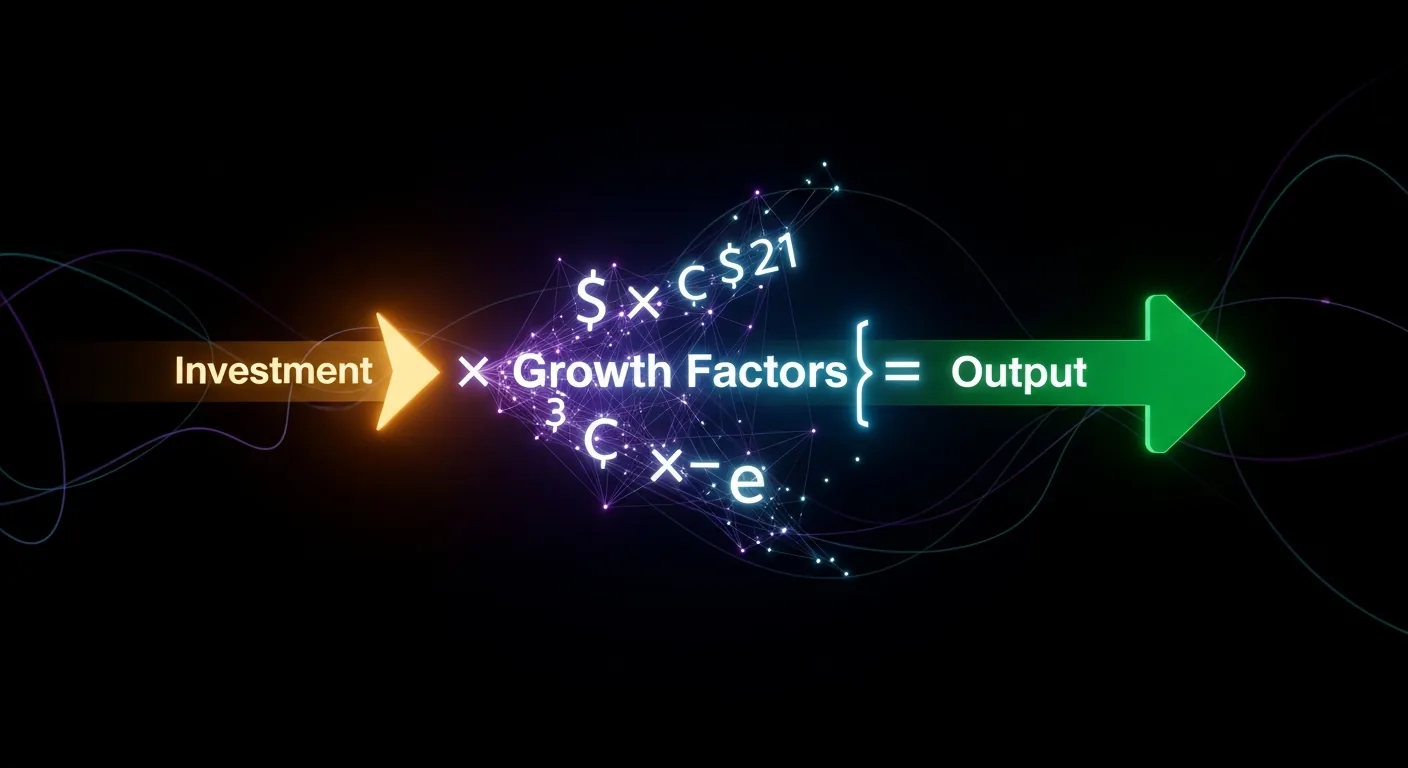
The base formula is simple: ROI = (gain − cost) / cost × 100%. If you invested $5,000 and got $15,000 in return, ROI = 200%. The difficulty isn't in the formula—it's in being honest with the two numbers. Most people get it wrong by understating costs and overstating benefits. Let's break down both sides.
Hidden costs nobody talks about
Implementation cost isn't just the price tag. Total cost of ownership includes:
- Integration and setup. Integrations with CRM, email, and data — often more work than the solution itself.
- Data preparation. Get documents and processes in order before launch.
- Team training. People need to learn to work with the new tool.
- Current support. Retraining, quality control, updates.
- Time to adapt. The first weeks the effect is lower while the system calibrates.
An honest calculation accounts for all five. Otherwise, the "cheap" solution turns out expensive.
How to calculate value without illusions
The benefit from AI comes in two types, and you need to measure both separately:
- Savings (time and costs saved). How many hours of routine AI takes off the team, and what those hours cost.
- Earnings (money recovered). How many leads you stop losing, how many deals you add thanks to faster response.
The second part is usually bigger, but it's the one people forget to count. A lead lost to a slow response is real money — and AI gets it back.
Example: AI agent for inbound lead handling
Simplified, to give you a feel for the logic. A business gets 200 inquiries a month. Without AI, 30% are lost due to slow response in the evenings and on weekends. Average deal size is $500, inquiry-to-sale conversion is 10%.
- Losing right now: 60 lost leads × 10% × $500 = $3,000 in missed revenue per month.
- Say AI returns 70% of those leads: ≈ $2,100 in additional revenue every month.
- Agent costs: one-time setup fee + monthly support.
Even conservatively, an agent pays for itself in the first few months, then works in profit. That's talking in numbers, not promises.
An approach that minimizes risk
The safest way is not to invest a big budget upfront. Start with one process where the effect is measurable (lead handling, follow-up), launch it, collect real numbers over a few weeks, and scale only what has already paid for itself. That way you risk little, and you make decisions about big investments based on your own data, not a presentation.
Want to calculate the ROI of AI for your specific business? AiUse starts with an audit where the effect is measured in money. See AI Growth Sprint.
See AI Growth Sprint →Are you ready to measure ROI from AI?
Check what you already have — and you'll see how precisely you can calculate AI's payback in your business.
Ready to calculate ROI
Check off what you already know about your business
Bottom line: decisions by numbers, not emotions
AI pays off when it is attached to a specific task with a measurable effect. An honest ROI accounts for full costs and both types of benefit — savings and recovered revenue. The safest strategy is to start small, collect your own numbers, and scale only what is proven. Do not ask "will AI pay off at all." Ask "which single process will AI pay off fastest" — and start there.

AiUse Team
B2B AI & Growth Architects
Frequently asked questions about AI ROI
How do you calculate the ROI of AI implementation?
The basic formula: ROI = (benefit − cost) / cost × 100%. The difficulty is in honest numbers: you need to account for full costs (integration, data, training, support) and both types of benefit—time savings and recovered money from previously lost leads.
What hidden costs does AI implementation carry?
Beyond the price of the solution itself: integration with your systems, data preparation and cleanup, team training, ongoing support and retraining, plus reduced effectiveness in the first weeks of adaptation. An honest calculation accounts for all of these.
How fast does an AI agent pay for itself?
It depends on the task. For a lead handling agent that recovers lost leads, payback often comes within the first few months — because even a few recovered deals a month cover the costs. The exact number comes from a calculation on your data: leads, deal size, conversion, leakage.
Why do many AI projects fail to pay off?
Most often due to three mistakes: buying because it's trendy without a specific task, not calculating the total cost of ownership, and overestimating the benefit based on vendor promises. AI without a business case and calculation is an expense disguised as innovation.
How to reduce risk when adopting AI?
Don't commit a big budget upfront. Start with one process that has a measurable impact, launch it, collect real numbers over a few weeks, and scale only what has already paid for itself. That way, big investment decisions are made on your data, not on a presentation.